1. Advanced Technology
The main drive system adopts advanced AC frequency conversion speed control technology. Compared with traditional electromagnetic and DC speed regulation systems, it offers improved energy efficiency, environmental friendliness, a wide speed regulation range, high transmission efficiency, precise speed control, and stable operation.
2. High Installation Accuracy and Reliability
After welding the bases of the supporting rollers and thrust rollers, vibration aging treatment is applied to eliminate welding stress. Integrated machining using large vertical lathes and boring–milling machines ensures high machining accuracy and strict shape and position tolerances, significantly improving the installation accuracy and overall reliability of the equipment.
3. Smooth and Stable Operation
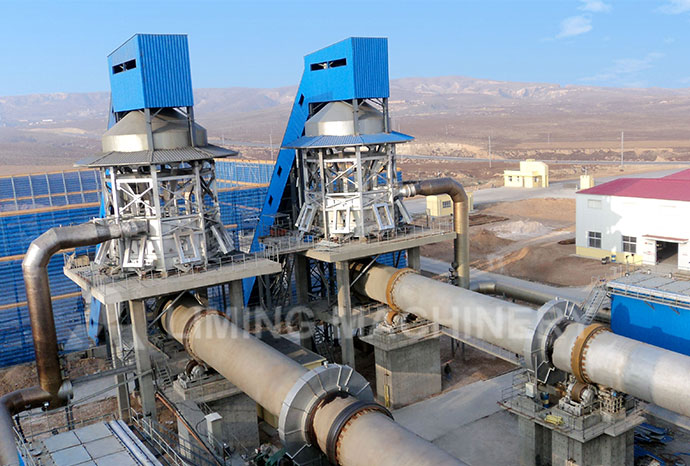
Based on the characteristics of limestone and the requirements of the calcination process, the kiln head and kiln tail have been structurally optimized. This effectively solves common issues such as material backflow at the kiln tail and dust leakage, ensuring smoother and more natural material conveying.
4. Stable Product Quality
The limestone is uniformly heated during calcination, resulting in stable quicklime quality and a low over-burning rate. The kiln is particularly suitable for producing high-activity lime required in steelmaking applications.
5. Flexible Process Configuration
A vertical preheater can be installed at the kiln tail to fully utilize high-temperature flue gas generated during calcination. This allows limestone to be preheated from ambient temperature to the initial decomposition stage, improving lime activity while facilitating downstream transportation and storage.